

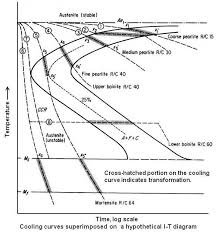
A cooling curve is a graphical representation that illustrates the change in temperature of a substance as it loses heat over time. It is a crucial concept in physics, chemistry, and materials science because it helps visualize and analyze the behavior of substances during phase transitions, such as from liquid to solid. By studying cooling curves, scientists and engineers can determine key thermal properties, including melting points, latent heat, and crystallization rates. Understanding cooling curves is essential in fields ranging from metallurgy and food science to chemical engineering, as it allows for precise control of temperature-dependent processes. This article provides an in-depth exploration of cooling curves, their characteristics, interpretation, applications, and significance in scientific and industrial contexts.
What Is a Cooling Curve?
A cooling curve is a plot of temperature versus time that shows how a substance cools from a higher temperature to a lower one. When a liquid is cooled, its temperature gradually decreases until it reaches the freezing point. At this point, the substance undergoes a phase change from liquid to solid, during which the temperature remains constant despite ongoing heat loss. This plateau on the cooling curve corresponds to the latent heat of fusion. Once the phase change is complete, the temperature continues to drop as the solid cools. The cooling curve thus provides a visual record of both sensible heat loss and the thermal energy involved in phase transitions.
Key Features of a Cooling Curve
Cooling curves typically exhibit distinct stages, each corresponding to specific thermal processes. The initial slope represents the cooling of the liquid above its freezing point. When the substance reaches its freezing point, the curve flattens, forming a plateau where the latent heat of fusion is released. This plateau is critical because it indicates the energy required for the phase change without a change in temperature. After the substance solidifies, the curve resumes a downward slope as the solid cools further. The shape of the cooling curve can also provide information about impurities, supercooling, and crystallization dynamics.
The Science Behind Phase Changes in Cooling Curves
Phase changes occur because energy is required to break or form intermolecular bonds. In a liquid-to-solid transition, the molecules lose mobility and arrange into a structured lattice, releasing energy in the form of latent heat. During this phase change, the temperature remains constant because the heat loss is balanced by the energy released as the substance solidifies. Understanding this process is essential in thermodynamics, as it explains why temperature does not always directly correlate with heat content during phase transitions.
Factors Affecting Cooling Curves
Several factors can influence the shape and characteristics of a cooling curve. The rate of cooling depends on the thermal conductivity of the substance, ambient temperature, and the presence of impurities or solutes. Impurities can lower the freezing point, causing the plateau to occur at a lower temperature and altering the overall curve shape. The surface area of the substance and the container’s material also affect heat transfer rates. Supercooling, a phenomenon where a liquid remains below its freezing point without solidifying, can further modify the curve, creating sudden drops when crystallization eventually occurs.
Interpreting a Cooling Curve
Analyzing a cooling curve provides insights into the thermal and physical properties of a substance. The temperature plateau corresponds to the freezing point and the latent heat released during solidification. The slope of the descending portions reflects the specific heat capacity of the substance in its liquid and solid states. By examining these features, scientists can determine critical data such as melting point, cooling rates, and the influence of additives or impurities. Accurate interpretation of cooling curves is crucial for research and industrial processes that rely on controlled solidification or crystallization.
Applications of Cooling Curves in Science and Industry
Cooling curves have diverse applications across multiple disciplines. In metallurgy, they are used to study the solidification of metals and alloys, allowing engineers to optimize casting and heat treatment processes. In food science, cooling curves help control freezing processes for preservation and quality retention. Chemical engineers use cooling curves to monitor crystallization during chemical synthesis, ensuring product consistency. Even in materials research, cooling curves are essential for analyzing thermal behavior, phase diagrams, and structural changes in polymers, glasses, and other materials.
Cooling Curves and Crystallization
The study of cooling curves is closely linked to crystallization, as the shape of the curve reflects the kinetics and nature of crystal formation. Slow cooling generally produces larger, well-formed crystals, while rapid cooling can lead to smaller, less ordered structures or amorphous solids. By controlling cooling rates, scientists can influence material properties such as hardness, transparency, and thermal stability. Understanding the relationship between cooling curves and crystallization is vital for designing high-performance materials and achieving specific physical characteristics.
Limitations and Challenges in Using Cooling Curves
While cooling curves provide valuable information, there are limitations and challenges to their use. Accurate measurement requires precise temperature control and reliable sensors. Supercooling, uneven heat distribution, or impurities can complicate curve interpretation. Additionally, real-world systems may involve multiple simultaneous phase changes or chemical reactions, making the curves more complex. Despite these challenges, cooling curves remain a fundamental tool for understanding thermal behavior and phase transitions in both research and industrial contexts.
Conclusion
Cooling curves are powerful graphical tools that reveal how substances respond to heat loss and phase transitions. By showing temperature changes over time, these curves provide insight into the freezing point, latent heat, and crystallization processes. They are essential in physics, chemistry, materials science, and engineering for understanding, controlling, and optimizing thermal behavior. From metallurgy to food processing and chemical manufacturing, cooling curves allow scientists and professionals to predict and manipulate material properties. Understanding and interpreting cooling curves is critical for anyone working with temperature-sensitive processes, making them a cornerstone of practical and theoretical thermal science.
Frequently Asked Questions (FAQ)
What is a cooling curve?
A cooling curve is a graph showing how a substance’s temperature changes over time as it loses heat, highlighting phase changes such as solidification.
Why does the temperature plateau during a phase change?
The temperature remains constant during a phase change because the heat lost is used to rearrange molecules into a solid structure, releasing latent heat.
What factors affect the shape of a cooling curve?
Factors include the substance’s thermal conductivity, presence of impurities, cooling rate, container material, and environmental conditions.
How is a cooling curve used in metallurgy?
It helps analyze solidification of metals and alloys, optimizing casting, heat treatment, and crystallization processes.
Can a cooling curve show supercooling?
Yes, supercooling occurs when a liquid drops below its freezing point without solidifying, causing sudden temperature drops when crystallization happens.
What information can be obtained from a cooling curve?
Key data include freezing point, latent heat, specific heat capacities, cooling rates, and insights into crystallization behavior.
