

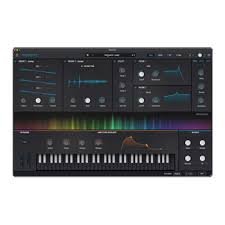
Arturia Pigments has established itself as one of the most versatile and visually intuitive software synthesizers in modern music production, offering a rich blend of synthesis engines, modulation depth, and sound design flexibility. Among the many creative possibilities it provides, one of the most intriguing is the ability to experiment with alternative tuning systems such as 432Hz precise temperament. While the global music industry standard tuning is set to A=440Hz, a growing number of musicians, producers, and sound designers are exploring 432Hz as a reference frequency, often describing it as warmer, more organic, or emotionally resonant. When implemented inside Arturia Pigments, 432Hz precise temperament becomes more than just a pitch shift; it becomes a creative framework that influences harmonic relationships, tonal color, and the emotional character of musical compositions. This article takes an in-depth look at what 432Hz precise temperament means, how it works within Arturia Pigments, and why it has become a compelling tool for modern producers who want to move beyond conventional tuning standards and explore new sonic dimensions.
Understanding 432Hz Tuning and Its Musical Background
The idea of tuning music to 432Hz has its roots in historical pitch standards and modern reinterpretations of how sound frequencies interact with human perception. Before the widespread adoption of A=440Hz in the twentieth century, different regions and orchestras used varying tuning references, many of which were lower than today’s standard, with some historical instruments and tuning forks measuring close to 432Hz. Advocates of 432Hz tuning often argue that it aligns more naturally with mathematical patterns found in nature, as well as with the harmonic series, though scientific consensus on these claims remains inconclusive. From a purely musical standpoint, tuning to 432Hz simply means that every note in the scale is slightly lower in pitch compared to 440Hz tuning, resulting in a subtle but noticeable shift in tonal color and overall mood. In practical terms, this shift can make music feel more relaxed, grounded, or introspective, depending on the listener’s sensitivity and the musical context. When this tuning philosophy is applied inside a precise digital environment like Arturia Pigments, it allows musicians to explore the aesthetic and emotional implications of alternative tuning with consistency and accuracy.
What Precise Temperament Means in Digital Music
Precise temperament in digital music refers to the ability to define and control pitch relationships with mathematical exactness rather than relying on fixed or approximate tuning presets. Traditional equal temperament divides the octave into twelve equal semitones, which makes it easy to transpose music into any key while maintaining consistent interval relationships, but it also introduces slight compromises in harmonic purity. A precise temperament approach allows musicians to go beyond this limitation by adjusting the global tuning reference, implementing microtonal scales, or designing custom tuning tables that define exact frequency ratios for each note. In the context of Arturia Pigments, precise temperament means that users can shift the entire instrument’s tuning system to 432Hz while preserving accurate pitch relationships across all oscillators, modulation sources, and synthesis engines. This level of control ensures that the tuning remains stable and repeatable across projects, which is essential for professional production and experimental sound design alike. By combining precise temperament with modern synthesis techniques, Pigments becomes a powerful platform for exploring new harmonic structures, emotional textures, and unconventional musical ideas.
Overview of Arturia Pigments and Its Tuning System
Arturia Pigments is a hybrid software synthesizer that integrates multiple synthesis methods, including wavetable, virtual analog, granular, harmonic, and sample-based synthesis, all within a single cohesive interface. One of its standout features is its deep modulation architecture, which allows nearly any parameter to be controlled by envelopes, LFOs, function generators, random sources, and macros. Beyond synthesis and modulation, Pigments also includes flexible tuning and pitch control options that make it particularly suitable for alternative temperament exploration. Users can adjust the master tuning reference, apply fine pitch offsets, and load custom tuning files that redefine how each note is calculated. These features make it possible to implement 432Hz precise temperament with a high degree of accuracy, ensuring that all sound engines and modulation behaviors remain synchronized with the chosen tuning system. By offering both simplicity for beginners and depth for advanced users, Pigments provides a balanced environment where alternative tuning experiments can be integrated seamlessly into both traditional and experimental music production workflows.
Implementing 432Hz Precise Temperament in Arturia Pigments
Setting up 432Hz precise temperament in Arturia Pigments involves redefining the instrument’s global tuning reference so that the note A is interpreted as 432Hz instead of the default 440Hz. This adjustment can typically be made within the global settings or tuning section of the interface, where users can input a custom reference frequency value. Once this change is applied, all notes across the keyboard are recalculated based on the new tuning standard, resulting in a consistent pitch shift that preserves relative intervals while altering the overall tonal center. For users who want even greater control, Pigments also supports custom tuning files in standard microtuning formats, allowing for the creation of detailed tuning tables that define precise frequency ratios for each note. This capability makes it possible to combine 432Hz tuning with just intonation, historical temperaments, or experimental microtonal scales. By carefully configuring these settings, producers can ensure that their sounds remain harmonically coherent while embracing the subtle tonal qualities associated with alternative tuning systems.
Creative Impact of 432Hz on Sound Design
Using 432Hz precise temperament in Arturia Pigments has meaningful creative implications that extend beyond simple pitch adjustments. Many musicians describe 432Hz-tuned music as having a warmer, smoother, or more emotionally resonant quality, although these perceptions are subjective and vary from listener to listener. From a sound design perspective, the slight lowering of pitch can subtly change the way harmonics interact, influencing the perceived depth, richness, and softness of synthesized tones. Pads may feel more immersive, bass sounds may appear fuller and less aggressive, and lead melodies may take on a gentler, more introspective character. When combined with Pigments’ powerful modulation and effects capabilities, 432Hz tuning can be used to craft atmospheric textures, meditative soundscapes, and expressive cinematic cues that emphasize emotional nuance. This tuning approach can also inspire new compositional ideas, encouraging musicians to explore slower tempos, more spacious arrangements, and harmonic progressions that complement the tonal character of the tuning system. By integrating precise temperament into the creative workflow, producers can unlock new dimensions of sonic expression that go beyond conventional tonal frameworks.
Technical Accuracy and Stability in Digital Tuning
One of the major advantages of using 432Hz precise temperament in a digital synthesizer like Arturia Pigments is the ability to maintain consistent and repeatable tuning accuracy across sessions, projects, and collaborative environments. Unlike acoustic instruments, which are subject to tuning drift caused by temperature changes, humidity, and mechanical wear, digital instruments provide a mathematically exact tuning reference that remains stable over time. Pigments ensures that all oscillators, modulation sources, and pitch-related parameters remain synchronized with the chosen tuning system, eliminating the risk of unintentional detuning or phase inconsistencies. This technical reliability is especially important for producers working on long-term projects, film scores, or multi-track compositions where tuning precision must be preserved across multiple recording sessions. By offering stable and precise temperament control, Pigments allows musicians to focus on creative exploration without worrying about tuning discrepancies, making it a valuable tool for both experimental sound designers and professional music producers.
Integrating 432Hz into Modern Production Workflows
Incorporating 432Hz precise temperament in Arturia Pigments into a modern music production workflow requires thoughtful consideration of how tuning choices interact with other instruments, samples, and plugins. When working within a digital audio workstation, it is important to ensure that other virtual instruments and audio samples are either retuned to match the 432Hz standard or selected in a way that avoids noticeable pitch conflicts. Some producers choose to apply global pitch-shifting plugins or retune audio samples to align with the new reference frequency, while others reserve 432Hz tuning for specific layers or musical sections to create contrast and tonal variation. Pigments’ flexibility makes it easy to experiment with these approaches, allowing users to test different tuning strategies and evaluate their impact on the overall mix. By carefully managing tuning consistency across the production environment, musicians can seamlessly integrate alternative temperaments into their workflow without compromising harmonic coherence or sonic clarity.
Future Directions in Alternative Tuning and Synthesis
The exploration of 432Hz precise temperament in Arturia Pigments reflects a broader trend toward greater experimentation with tuning systems, microtonality, and expressive pitch control in digital music production. As software synthesizers continue to evolve, tuning features are likely to become even more sophisticated, offering deeper integration with adaptive tuning algorithms, real-time pitch modulation, and culturally diverse tuning traditions. These advancements will empower musicians to explore new harmonic languages, psychoacoustic effects, and immersive sound design techniques with unprecedented precision and ease. Pigments already represents a significant step in this direction by providing a flexible and user-friendly platform for tuning experimentation. As artists continue to push creative boundaries, the combination of precise temperament control and advanced synthesis capabilities will play an increasingly important role in shaping the future of electronic music, sound design, and interactive audio experiences.
FAQ
What does 432Hz tuning mean in Arturia Pigments? It means setting the reference pitch for the note A to 432Hz instead of the standard 440Hz, resulting in a slightly lower overall pitch across all notes.
Can Arturia Pigments support precise temperament tuning? Yes, Pigments allows users to adjust the global tuning reference and import custom tuning files for highly accurate temperament control.
Does 432Hz sound better than 440Hz? Perceptions vary, and while some listeners describe 432Hz as warmer or more natural, others hear little difference, making it a subjective creative choice.
Will 432Hz tuning affect my mix with other instruments? Yes, it can create pitch differences if other instruments remain tuned to 440Hz, so consistent tuning management is important.
Is precise temperament useful for all music genres? Yes, it can be applied to any genre, including electronic, ambient, cinematic, experimental, and even pop music, depending on artistic goals.
Conclusion
Arturia Pigments 432Hz precise temperament represents a powerful intersection of historical tuning concepts and modern digital sound design technology. By allowing musicians to redefine the fundamental pitch reference and explore alternative temperaments with mathematical accuracy, Pigments opens new creative pathways for expressive composition, immersive soundscapes, and innovative musical experimentation. While the emotional and perceptual effects of 432Hz tuning remain subjective, its creative potential is undeniable, offering a subtle yet meaningful way to shape the tonal character of music. Through careful implementation, thoughtful workflow integration, and a willingness to explore new harmonic possibilities, producers can harness the full potential of precise temperament to expand their artistic horizons. As digital music tools continue to evolve, the exploration of tuning systems like 432Hz will remain an inspiring and valuable aspect of contemporary music production, encouraging musicians to rethink conventional standards and embrace the limitless possibilities of sound.
